Blog
Floors That Stay Brand New: Marble Crystallisation Guide 2026

On the first day, your marble floors looked great. They look dull, flat, and tired now that they’ve been mopped and cleaned every day for months. Does this sound familiar? You’re not the only one, and your cleaning routine isn’t to blame.
The real problem is that most people treat marble like any other hard floor. But marble is a stone that lives. It reacts with acids, wears down when people walk on it, and loses its surface integrity over time. Regular cleaning just won’t fix that damage.
Many building owners have never heard of marble crystallization, which is the professional-grade solution that changes everything. What if one process could fix, protect, and strengthen your marble all at the same time? That’s exactly what crystallization does.
What Is Marble Crystallisation?
Marble Crystallisation is a way to make the surface of your marble harder by chemically bonding with the calcium carbonate in it to make a new crystalline layer. You could say that it gives your floor a molecular boost.
This process doesn’t just sit on top of the marble as regular cleaning or sealing does. It becomes part of the marble. The end result is a surface that is harder, denser, scratch-resistant, moisture-resistant, and has a deep, natural shine.
It’s important to make clear what this process isn’t. It’s not a coat of wax, polish, or protective film. Those are all treatments that only work on the surface and wear off.
Marble crystallisation is a permanent chemical reaction that changes the structure of the stone’s top layer.
Professionals use certain crystallising solutions, usually ones that contain magnesium fluosilicate, that react with the calcium in marble. What happened? A floor that is noticeably harder and much more durable than it was before treatment.
How Does Marble Crystallisation Work? (Step-by-step Guide)
It may look easy, but every step is important. During a professional treatment, this is what happens:
- Preparing the Surface and Deep Cleaning: The floor is cleaned very well to get rid of dirt, grease, old sealers, and any other things that might be there. Any trash that is left behind will get in the way of the chemical reaction.
- Using the Crystallising Solution: A pH-balanced crystallising chemical is evenly spread over the surface of the marble. Tip: Professionals always use pH-balanced solutions so they don’t overreact with the stone, which can make it cloudy or uneven.
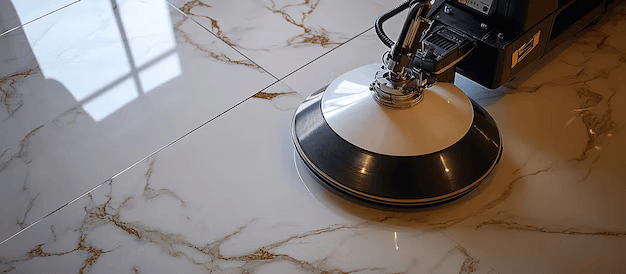
- Machine Burnishing is when a floor machine with steel wool pads runs over the surface. The heat from the friction starts the chemical reaction. A mop or hand buffer can’t do this.
- The Chemical Reaction: The crystallising agent reacts with the calcium carbonate in the marble to make calcium silicate fluoride, which is a much harder crystalline compound. This happens on a very small scale, when it bonds directly to the stone.
- Buffing to a High-Gloss Finish — After the reaction is over, the floor is buffed to bring out the full shine. The result is a surface that looks like a mirror with depth and clarity that polish just can’t give you.
This multi-step process is what makes professional results look so different from DIY ones. If you skip any of the steps, the final result will be worse.
Important Benefits of Marble Crystallisation
There are many benefits here that go beyond beauty. This is what you really get:
Brings Back Natural Shine — The stone gets its original shine back without grinding or taking material off the surface. It makes the surface harder at the molecular level. The treated marble is much harder than untreated stone, which can be measured with a Mohs hardness test. Makes it harder to scratch, stain, and walk on — High-traffic areas that used to show wear within weeks can now last for months without needing to be retreated.
Extends the Life of Marble Floors Significantly — With the right crystallisation cycles, floors that would need to be replaced in 10 to 15 years can last for decades. More environmentally friendly than grinding or honing because it doesn’t remove any stones, which means less waste, dust, and chemicals in general. Works for Both Home and Business Floors — This treatment works in any setting, from a hotel lobby with thousands of visitors every day to a home kitchen that gets a lot of spills.
To give you an idea of how bad it was, we’ve worked on marble lobbies in businesses where the floor was obviously pitted, dull, and scratched. After just one Marble Crystallisation treatment, the surface looked just like a new installation, but it cost a lot less to do.
What Is the Difference Between Marble Crystallisation and Marble Polishing?
We get this question a lot, and it’s a good one because both processes make floors shine. But that’s where the similarities end.
The main difference is that Marble Crystallisation is a chemical process that makes the stone harder by reacting with it. Marble polishing is a mechanical process that takes off a thin layer to make the surface smoother.
Neither is better for everyone; they have different uses. Crystallisation is the best way to keep things clean and safe. If you have deep scratches, severe etching, or a floor that needs a full reset before maintenance can start, polishing is the best option.
In a lot of professional restoration projects, both processes are used together: first, polish to fix damage, and then crystallise to protect and keep it that way.
Who Should Use Marble Crystallisation?
Not all floors need this treatment, but a lot do. The people who benefit the most are:
✔ Homeowners with Marble Floors That Get a Lot of Use — Entryways, kitchens, and bathrooms that get a lot of use every day are great candidates. ✔ Hotels, offices, and businesses — Lobbies, hallways, and reception areas that get hundreds of visitors every day need regular Marble Crystallisation to look good. ✔ Anyone Who Sees Dullness, Micro-Scratches, or Etching — If your floors don’t clean up as well as they used to, this is probably why.
Important note: this process only works with marble. It works because marble has calcium carbonate in it. It is NOT safe to use on granite, limestone, travertine, or other types of stone unless you have a product that is made just for those types of stone. Before you go ahead, always check with a professional to make sure you have the right type of stone.
How Often Should Marble Be Crystallised?
How often you do it depends on how much damage your floors can take:
Residential Floors: If there is normal foot traffic, every 12 to 24 months is usually enough. Business and busy areas: every three to six months. It might be needed even more often in hotel lobbies and busy office hallways.
Not sure if it’s time yet? Check for these signs:
The floor still looks dull after being mopped; Water no longer beads on the surface but spreads out; You can see micro-scratches or haziness in direct light; and Foot traffic patterns are becoming more obvious.
Use only pH-neutral cleaners on your floors between sessions. Acidic cleaners, like vinegar, will scratch the marble and remove the protective layer. Instead of using rough scrubbers, use microfibre mops. Clean up spills right away, especially those that involve coffee, wine, or citrus juice.
Crystallising Marble Yourself vs. Hiring a Pro
Yes, there are kits for crystallising marble that you can use yourself. No, we don’t think you should use them, and here’s why.
To make the chemical reaction work, you need the right equipment: a high-speed floor machine, the right grade of steel wool pads, and professional crystallising solutions made just for the type of marble you have. Consumer kits don’t do any of these things well.
Some of the risks of doing it yourself are:
Chemical burns: Using the wrong concentrations can permanently stain or etch the marble. Uneven results: Consumer floor machines don’t create the steady heat and pressure that are needed. Using the wrong product on your stone: Using a general-purpose kit on a specific type of marble can cause damage that can’t be fixed.
If you want to hire someone to do Marble Crystallisation, here are some things to look for and ask:
Do they have liability insurance that covers stone restoration? Can they show you pictures of similar projects before and after? What kind of crystallising brand and solution do they use? Do they first test on a small, hidden area?
Cost: Depending on the condition of the floor, where it is, and how big the project is, professional marble crystallisation usually costs between $2 and $8 per square foot. This is a small part of the cost of re-polishing or, even worse, replacing marble in most homes.
Final Thoughts
Marble crystallisation isn’t a luxury; it’s the best way to take care of any marble floor. It makes the stone look better, makes it harder, makes it last longer, and protects your investment, all without hurting the stone.
Look closely at your marble floors right now. If the shine is fading, water isn’t beading, or you can see the ghost of foot traffic patterns, don’t wait. The longer you wait, the more expensive the restoration will be.
Are you ready to bring your floors back to life? Get in touch with a certified marble restoration expert right away to set up your consultation. Your floors will be grateful for it.
Questions That Are Often Asked (FAQs)
What is marble crystallisation and how does it work?
Marble crystallisation is a way to harden the surface of marble by using heat and friction to make a solution that crystallises, usually magnesium fluosilicate, react with the calcium carbonate in the marble. This makes a new crystalline compound (calcium silicate fluoride) that is much harder than the stone it came from. The result is a floor that is shinier, less likely to get scratched, and lasts longer, all without taking away any material from the surface.
What is the difference between crystallising and polishing marble?
To polish marble, you use abrasive pads to grind and smooth the surface, which removes a thin layer of stone. Marble crystallisation is a chemical process that adds a new layer of crystals to the surface without taking any material away. Polishing fixes damage that can be seen, while crystallisation keeps and protects. For the best long-term results, many professionals suggest using both.
How often should you crystallise marble floors?
Most of the time, marble crystallisation is suggested for homes every 12 to 24 months. If a commercial space gets a lot of foot traffic every day, like a hotel lobby or an office hallway, it might need treatment every three to six months. If you can see that the surface is dull, water isn’t beading on it anymore, and micro-scratches are showing up in the light, it’s time to retreat.
Is it possible to crystallise marble on all kinds of stone?
No. Standard marble crystallisation is made just for marble and its calcium carbonate content. You shouldn’t use it on granite, limestone, travertine, or engineered stone unless you have special product variants made for those materials. To avoid damage, always have a professional identify your stone before you schedule a treatment.
Is it worth it to pay for professional marble crystallisation?
Yes, for most marble floors, especially those that get a lot of foot traffic in homes or businesses. Professional marble crystallisation costs between $2 and $8 per square foot, which is much less than mechanical grinding, re-polishing, or replacing the marble. It makes the floor last longer, lowers the cost of future maintenance, and keeps the surface looking like it has been professionally cleaned for much longer than regular cleaning.